
Installation and Disassembly Method of Common Rolling Bearing
Rolling bearings are the core components of mechanical equipment, and their installation and disassembly quality directly impacts the operational accuracy, stability, and service life of the equipment. Proper handling methods can prevent issues such as bearing deformation and raceway damage, thereby reducing the risk of equipment failure. This article will provide a detailed introduction to the installation and disassembly methods of commonly used rolling bearings, along with specific operational guidelines.
1. Installation Method and Operation of Rolling Bearing
Three preparatory steps are required before installation: First, verify that the bearing model meets design specifications by inspecting surface defects such as rust or scratches, and rotate the inner or outer ring to confirm smooth operation without sticking. Second, clean the shaft journal, bearing housing bore, and installation tools to remove oil, metal shavings, and other contaminants. Third, prepare tools including hammers, copper rods, sleeves, heating devices (e.g., oil bath furnaces), and micrometers according to bearing dimensions and installation requirements.
1. Cold installation method: suitable for small bearings with inner diameter ≤50mm
This method requires no heating and involves direct force application using tools. Procedure: 1. Secure the bearing smoothly onto the shaft journal, ensuring its end face flushes with the shoulder. 2. Install a sleeve with an inner diameter slightly larger than the shaft and an outer diameter slightly smaller than the bearing’s outer ring, avoiding direct impact on the outer ring. 3. Apply even hammer strikes to the sleeve’s end face while monitoring the bearing’s position until full alignment with the shaft shoulder is achieved. 4. Rotate the bearing by hand post-installation to confirm smooth operation without resistance.
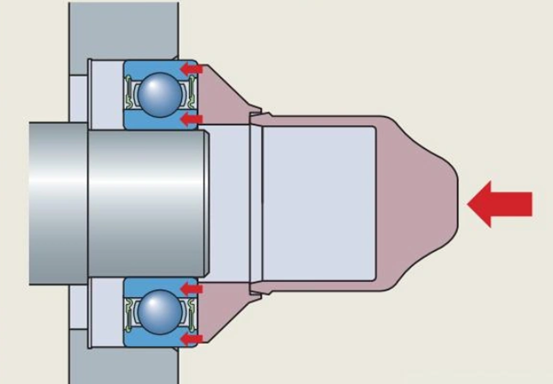
Figure 1: Schematic diagram of cold-installation tool assembly and bearing installation
2. Hot installation method: suitable for medium and large bearings with inner diameter>50mm
Utilize thermal expansion and contraction principles to enlarge the inner ring bore of the bearing, thereby reducing installation resistance. Procedure: Submerge the bearing in clean transformer oil or specialized bearing heating oil, ensuring full immersion with a minimum 50mm clearance from the container bottom to prevent uneven thermal contact. Maintain heating at 80-100°C (maximum 120°C), with real-time monitoring using a thermometer. The 20-40 minute heating period ensures uniform temperature distribution across both inner and outer rings. After removal, immediately wipe surface contaminants with a clean cotton cloth. Align the bearing with the shaft neck and insert it swiftly, using a copper rod to tap the inner ring end face for positioning until proper shoulder contact is achieved. The bearing will naturally contract upon cooling to form a tight seal with the shaft neck. Post-cooling, recheck rotational flexibility.
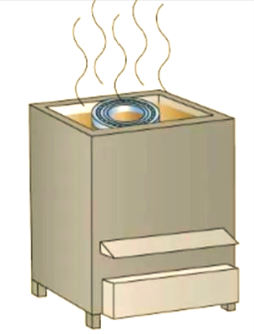
Figure 2: Schematic diagram of oil bath heating device operation
3. Bearing housing installation: for the scene of the outer ring and bearing housing cooperation
For interference fit between the bearing outer ring and housing, apply lubricant to the outer ring and install it by evenly tapping the end face with a sleeve. For clearance fit, simply insert the bearing into the housing bore, ensuring the outer ring aligns with the locating step. After installation, measure radial runout and axial movement using a micrometer, with errors meeting the equipment’s precision requirements.

Figure 3: Schematic diagram of bearing housing installation and precision inspection
2. Disassembly Method and Operation of Rolling Bearing
Before disassembly, clean the bearing and its surroundings, and note the bearing’s installation position and orientation to prevent errors during reassembly. Select appropriate disassembly tools based on the bearing’s installation method, such as pullers, disassembly tools, heating devices, or hydraulic systems.
1. Rama disassembly method: the most commonly used disassembly method, suitable for bearings with exposed shaft ends
Select a puller with compatible specifications to ensure its claws securely grip the bearing’s inner ring, preventing deformation from contact with the outer ring. Align the screw rod tip with the shaft center, then rotate the rod slowly to distribute even force across the claws for smooth bearing removal. For tight bearings, apply a small amount of lubricant to the inner ring or use a heat gun to rapidly warm it (temperature ≤100°C). This thermal expansion and contraction effect reduces tightness before disassembly.

Figure 4: Schematic diagram of bearing disassembly operation
2. Knocking and disassembly method: suitable for small and clearance bearing
Use a copper rod or soft material to press against the end face of the bearing’s inner ring and tap evenly around its circumference. Apply moderate force to prevent damage to the shaft journal or bearing. If the bearing is at the shaft’s end, secure the shaft and tap directly on the end with a hammer, using the counterforce to remove the bearing. For bearings located in the shaft’s middle section, first align the force application point with the sleeve before tapping.

Figure 5: Schematic diagram of force application points and operational guidelines for the knock-and-disassemble method
2. Hydraulic disassembly method: suitable for large and large interference bearing
When the hydraulic oil hole is preset at the shaft end, connect the hydraulic device to the oil hole and slowly inject high-pressure oil to create a gap between the shaft and the inner ring of the bearing. Simultaneously, use a puller to assist in removing the bearing smoothly. This method effectively reduces damage to the shaft and bearing, ensuring the reusability of the components.

Figure 6: Schematic diagram of hydraulic disassembly device connection and operation process
III. Precautions
During installation and disassembly, never directly strike bearing rolling elements or cages with hammers to prevent severe damage. Use specialized lubricants when heating bearings to avoid contamination. After disassembly, thoroughly clean and inspect the bearings. Replace any bearing with wear, cracks, or other defects immediately. Strict adherence to standardized procedures is essential for ensuring stable operation of bearings and equipment, and all process requirements must be rigorously followed.
Proper installation and disassembly of rolling bearings are crucial to ensuring equipment reliability, reducing maintenance costs, and extending service life. By adopting correct procedures, choosing appropriate tools, and maintaining strict operational discipline, enterprises can significantly minimize the risk of mechanical failure and performance degradation.
As a trusted supplier of high-precision bearing solutions, TP provides a broad range of products and technical support tailored to diverse industrial applications. Backed by advanced manufacturing capabilities, rigorous quality management, and a customer-focused approach, TP is committed to helping global partners achieve higher efficiency, lower failure rates, and long-term operational stability. For more information or technical consultation, please contact TP.
Post time: Dec-02-2025


